A growing business can outgrow its phone system faster than many owners expect. What once worked for a small team sharing a few lines can quickly become frustrating as departments expand, call volume increases, and employees begin working across multiple locations or remotely. Missed calls, long hold times, and inefficient call routing don’t just slow down communication; they can impact customer trust and business opportunities.
This is why many growing companies start reviewing their communication systems before problems begin affecting day-to-day operations. Modern business phone systems are designed to support scalability, improve customer experiences, and keep teams connected whether they’re in the office, working remotely, or spread across several locations. This blog explores the common reasons businesses reassess their phone systems during expansion and how updated communication tools help support long-term growth.
Key Takeaways
- Growing teams quickly outgrow basic phone systems designed for small operations, with capacity limits becoming problematic once organizations exceed 10-15 employees
- Departmental structures, remote and hybrid work models, and multi-site operations create communication requirements that traditional systems cannot efficiently address
- Customer service expectations increase significantly as businesses expand their market presence, requiring intelligent call routing and professional call handling
- Modern cloud-based phone systems provide the scalability and advanced features needed for growth, allowing businesses to add new users within minutes rather than weeks
- Proactive phone system reviews prevent communication bottlenecks during expansion and cost significantly less than reactive emergency replacements
Growing Teams Outgrow Basic Phone Infrastructure
When a business operates with fewer than ten people in a shared office, one or two phone lines with basic voicemail typically suffice. Everyone knows who handles which calls, manual transfers work because people sit close together, and missed calls get returned quickly. But as teams expand into double digits and departments form, these simple communication tools become inadequate.
Traditional phone systems often have a capped capacity, limiting the maximum number of devices or phone lines they can support. Adding more users may require purchasing new hardware, circuit cards, or rewiring, processes that take weeks and significant capital. Meanwhile, the business keeps growing, and communication gaps widen.
Metro Atlanta’s small business ecosystem illustrates this pattern clearly. Nearly 49% of Atlanta small businesses reported revenue growth in the past year, with 74% expecting continued expansion. The Atlanta Regional Commission notes that the region has added approximately 17,000 small firms since 2020, many of which are scaling from startup size to established operations. This growth trajectory means thousands of local businesses are simultaneously discovering that their existing phone system can no longer fully support higher call volume, new departments, or more flexible ways of working.
As businesses grow, they often reach a point where their existing phone systems become inefficient or too difficult to expand, which prompts a broader review of their communication infrastructure. The real question is not whether an upgrade will be needed, but whether the business will make the change proactively or wait until communication problems begin affecting operations.
When Current Systems Hit Their Limits
Specific capacity issues signal when a current phone system has reached its breaking point. Limited extensions mean new hires share lines or go without direct numbers. Insufficient phone lines create busy signals during peak hours. Hardware constraints make adding remote employees impossible without expensive workarounds. Frequent busy signals, missed calls, and limited remote access are often clear signs that your business needs a VoIP phone system that better supports growth.
Manual call transfers and basic voicemail management become inefficient bottlenecks as call volume increases. Data from service industries shows businesses can miss more than 70% of incoming calls during peak times when systems are overloaded. Each missed call represents potential lost revenue, damaged reputation, and frustrated customers who take their business elsewhere.
The financial impact can add up quickly. For example, if a construction company misses 15 calls a day during its busy season, even converting a small percentage of those missed opportunities could represent significant lost revenue. A medical practice that makes it difficult for patients to schedule appointments may also lose them to competitors. Legacy systems often lack features such as auto attendants, intelligent call routing, and call queues, which can create a poor customer experience for growing businesses.
Read More: Signs Your Business Needs a VoIP Phone System
New Communication Challenges That Emerge During Expansion

Growth creates communication challenges that basic phone systems were never designed to handle. As teams expand, departments become more specialized, and call volume increases, businesses need more structured tools to keep communication efficient. This is where it becomes clear how phone systems can help improve customer experience by routing callers faster, reducing unnecessary transfers, and helping employees respond more effectively.
- Departmental structures demand intelligent call routing. Sales calls need to reach sales, support calls need to reach support, and billing calls need to reach accounting, without customers navigating confusing phone trees or getting transferred multiple times. Modern phone systems are essential for supporting larger teams, as they offer features such as call routing and automated reception services that improve communication efficiency.
- Remote and hybrid work has become standard across industries. Older systems may struggle to support remote or hybrid work, as they are often tied to physical desks. Staff working from home or in the field need full access to business communication capabilities, the ability to make and receive calls from their business number, access voicemail, and collaborate with colleagues regardless of location. Modern phone systems enable employees to make and receive business calls from laptops, mobile devices, or desktop applications, ensuring accessibility even when working remotely.
- Multi-site operations require unified communications that make separate offices function as one organization. A customer calling the Suwanee office and reaching someone in Alpharetta shouldn’t notice the difference. Consistent numbering, centralized management, and seamless call forwarding between locations become essential.
- Customer service expectations rise as a business’s market presence grows. Customers of established companies expect professionalism, calls answered quickly and routed to the correct department, and helpful staff with relevant information at hand. Features such as automated call routing and voicemail management help ensure that customers reach the correct department quickly and receive faster responses.
Common Mistakes to Avoid During Growth
As communication demands increase, many growing businesses make the same avoidable mistakes when trying to extend the life of an outdated phone system.
Waiting until systems fail is the most expensive approach. Emergency replacements cost more, disrupt operations longer, and force decisions without adequate planning time. Reviewing phone systems is crucial for businesses experiencing growth, as outdated systems can lead to communication bottlenecks, missed calls, and inefficiencies in customer service.
- Applying piecemeal solutions creates technical debt. Adding a line here, forwarding phones there, and patching with consumer apps elsewhere results in a fragmented communication system that nobody fully understands and everyone finds frustrating. Separate systems for different functions increase complexity and training requirements while reducing reliability.
- Not planning for future growth means repeating the entire upgrade process in two years. Businesses switching to cloud-based systems typically operate on a per-user subscription model, making budgeting more straightforward and scaling more predictable. Traditional phone systems often require hardware upgrades, additional lines, or maintenance contracts that can significantly increase expenses.
- Failing to involve IT early results in phone systems that don’t integrate with other business applications, create security vulnerabilities, or exceed network capacity. High operating costs often result from maintaining legacy systems, including costly maintenance, wiring, and support expenses.
Understanding the steps for setting up a cloud-based business phone system can help businesses avoid fragmented tools, unnecessary downtime, and future scalability issues.
How Modern Phone Systems Support Business Growth
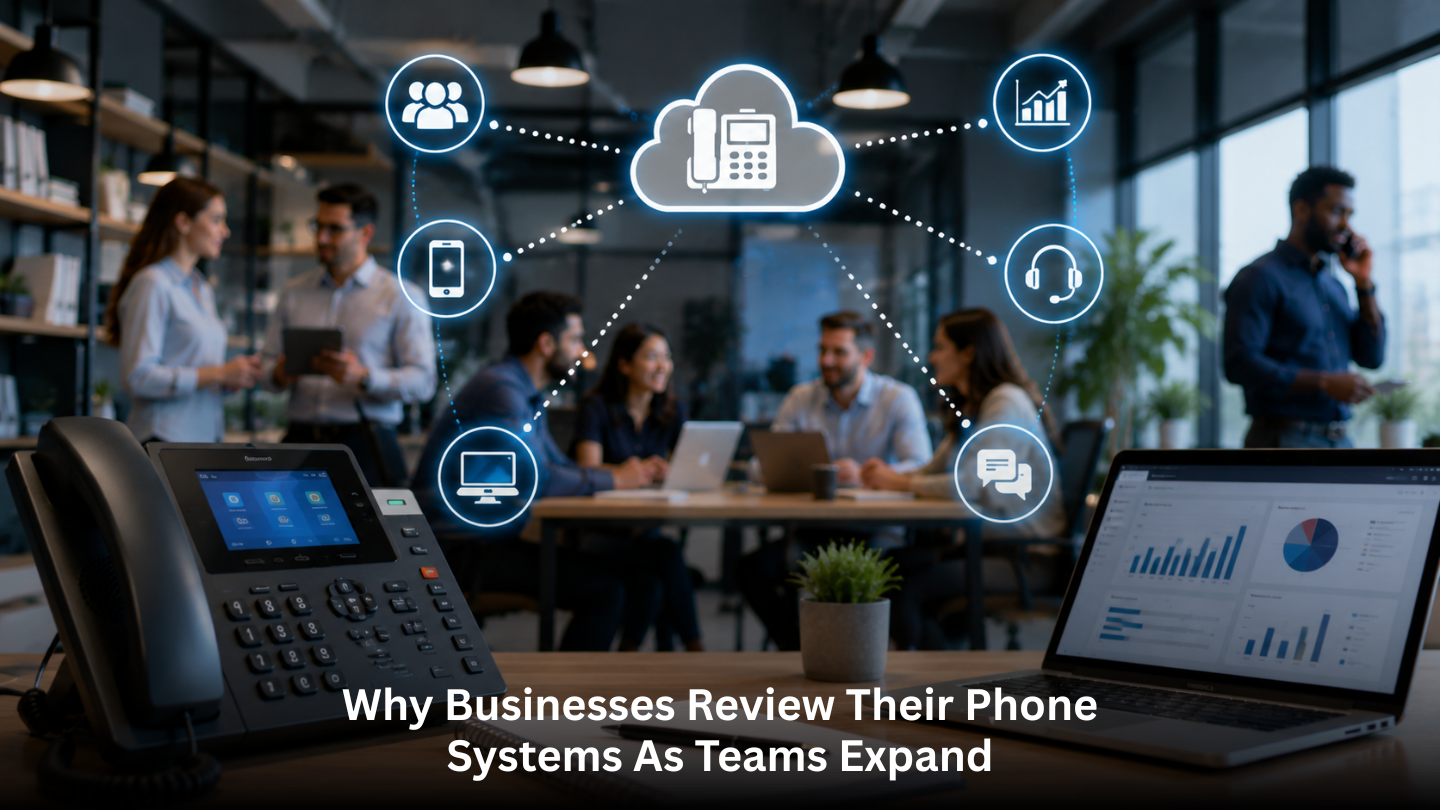
Modern phone systems are built to scale, making it easy for businesses to add users or extensions in minutes instead of waiting on hardware upgrades. That flexibility is one of the biggest advantages of cloud communications over legacy systems. For growing teams, cloud phone systems make it easier to support remote employees, manage calls across multiple locations, and expand without disrupting daily operations.
- Scalability means cloud-based phone systems allow companies to add or remove users as needed, providing predictable pricing models and operational control. No hardware installation delays, no capacity limits requiring new equipment purchases, no scheduling technicians to run physical lines. Cloud-based phone systems, such as Microsoft Teams Phone, allow businesses to scale easily by adding new users through software licensing, making it simpler to accommodate growth without complex hardware changes.
- Advanced features come standard with modern systems rather than requiring expensive add-on modules. Auto attendants, call routing, presence indicators, call queuing, and CRM integration enhance both internal communication and customer interactions. Advanced phone systems enable seamless communication by integrating voice, video, and messaging tools into a single platform, thereby enhancing the user experience and operational efficiency. The same platform supports desk phones, mobile devices, and desktop applications.
- Cost-effectiveness improves despite gaining features. Businesses can save up to 60% on monthly phone bills by consolidating voice and data onto a single network using advanced phone systems that utilize existing broadband infrastructure, eliminating the need for separate hardware and maintenance. Case studies show that cloud unified communications delivers approximately $87,400 in savings over five years and a 36% reduction in total cost of ownership compared to traditional PBX systems. Research indicates 82% of companies switching to cloud solutions report cost savings within the first year.
- Integration capabilities connect communication platforms with other business tools. Modern business phone systems can integrate with various digital tools, such as customer relationship management (CRM) platforms, to streamline workflows and improve efficiency. Integration of phone systems with other business applications enables features such as the automatic display of customer information during calls, enhancing service efficiency. When a customer calls, staff immediately see relevant account history, recent orders, or support tickets, improving customer satisfaction and employee productivity simultaneously.
Read More: How Can Atlanta Business Phone Systems Help Reduce Communication Costs
Industry-specific benefits address regulatory and operational requirements:

- Healthcare organizations need HIPAA compliance, secure communication, appointment system integration, and on-call routing. Modern systems support these requirements with encryption, audit trails, and mobile integration.
- Financial services and legal firms require call recording, retention policies, and security measures that legacy systems often cannot provide. Modern business phone systems incorporate advanced security measures, such as encryption and real-time threat detection, to protect against cyber-attacks and data breaches.
- Utilities and field service companies need mobile integration for employees rarely at desks, plus the ability to scale rapidly during emergencies when call volume spikes.
Reliability and business continuity improve with modern systems. As businesses grow, communication systems must remain reliable and secure, as disruptions can lead to significant consequences such as missed calls and interrupted customer service. A high uptime Service Level Agreement (SLA) is crucial for ensuring reliability in communication systems, typically guaranteeing service availability exceeding 99.9%. Cloud-based systems include built-in redundancy and failover capabilities that most on-premises systems cannot match.
Local businesses have reported meaningful improvements after switching to modern VoIP systems, including better support for remote teams and lower communication costs. For companies in the Atlanta area, these results highlight how a modern phone platform can improve flexibility, reduce overhead, and support day-to-day operations more effectively.
Final Thoughts
As businesses grow, their communication needs become more complex, making it important to have a phone system that scales with the organization. From improving call routing and supporting remote employees to reducing missed opportunities and strengthening customer service, modern communication platforms help businesses stay connected and operate more efficiently during every stage of growth.
Companies looking for reliable business phone systems in Atlanta, Alpharetta, Buford, and Gainesville can turn to IntegriCom for scalable communication solutions designed to support growing teams, multi-location operations, and evolving workplace demands. Combined with dependable managed IT services and proactive data backup and recovery solutions, businesses can improve collaboration, protect critical communications, and maintain smoother day-to-day operations without the limitations of outdated infrastructure. Ready to modernize your business communications? Contact us today.
Frequently Asked Questions
How do cloud-based phone systems better support growing teams compared to traditional PBX?
Cloud-based systems eliminate fixed hardware limits, allowing businesses to add new users within minutes through software licensing rather than waiting weeks for equipment installation. They provide advanced features such as auto attendants, call routing, CRM software integration, and mobile device support as standard. They also offer predictable per-user pricing that scales with growth, rather than requiring large capital investments in hardware upgrades.
What are the signs that a current phone system can’t handle business growth?
Warning signs include running out of available extensions for new hires, frequent busy signals on incoming calls, customers complaining about difficulty reaching the right person, voicemail boxes filling up regularly, and the inability to support remote employees with full phone functionality. Other indicators include rising maintenance costs for aging equipment, a lack of features such as video conferencing or file-sharing integration, and difficulty obtaining replacement parts for legacy hardware.
Can businesses keep their existing phone numbers when upgrading systems?
Yes, number porting is standard practice and virtually always possible when switching phone services. The process involves coordination between old and new providers, verification of ownership, and technical configuration, typically taking 1-2 weeks to complete. During transition, businesses can often have calls routed to the new system while porting completes, ensuring no calls are missed, and customer communication continues uninterrupted.
What should businesses consider when reviewing phone systems for remote workers?
Key considerations include ensuring a reliable internet connection at employee locations, selecting systems that provide softphone applications for laptops and mobile devices, and verifying seamless call forwarding between office and remote locations. Security matters significantly; look for encryption, secure authentication, and compliance with industry regulations. The system should facilitate seamless collaboration through unified communications capabilities, such as virtual meetings and presence indicators, and integration with collaboration tools like Microsoft Teams, enabling consistent employee productivity regardless of location.