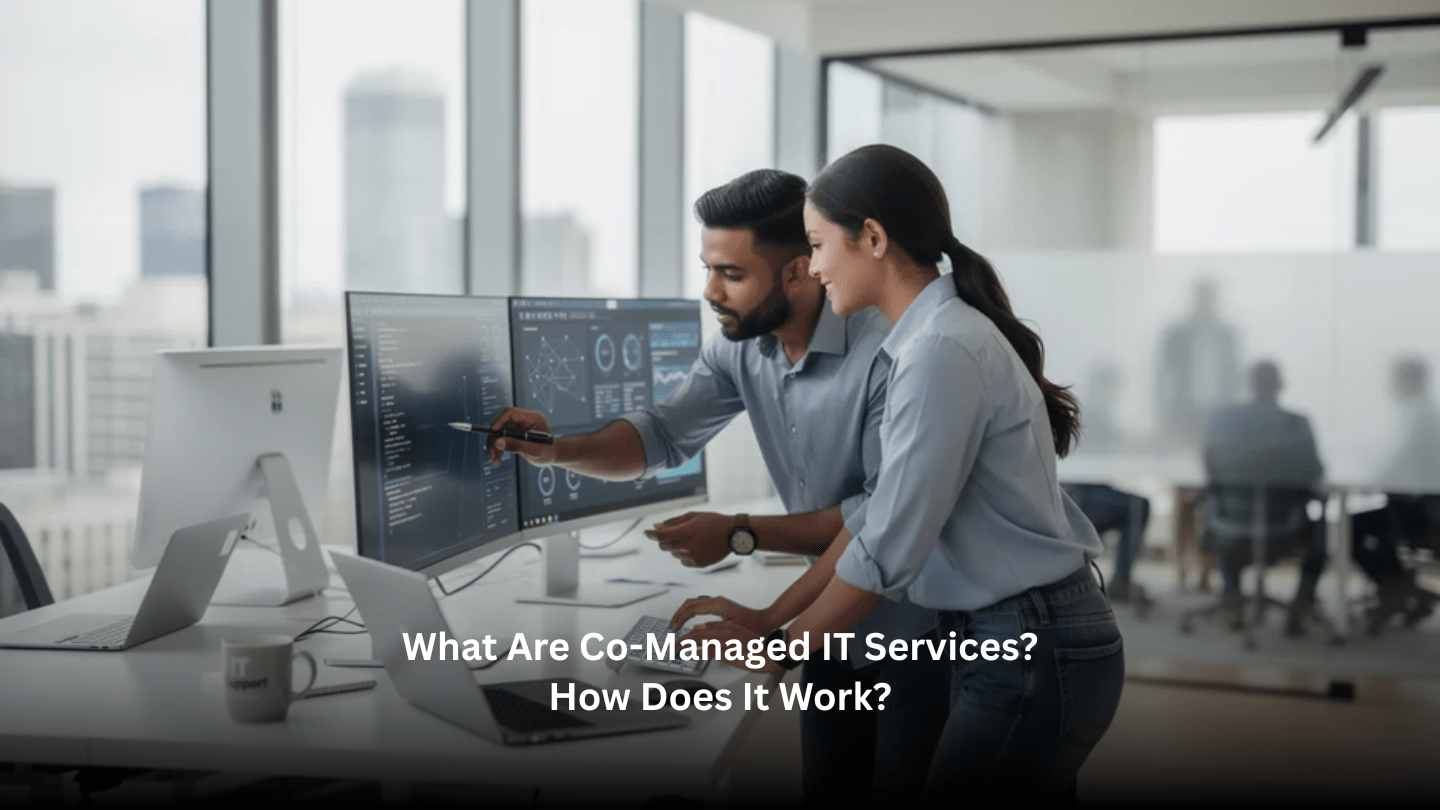
Technology demands are stretching mid-sized businesses thin, especially when small IT teams must juggle daily support, security, compliance, and major projects like cloud migrations. Co-managed IT services offer a practical solution by partnering internal IT staff with an experienced provider. In this blog, we explore how this collaborative model fills skill and resource gaps while keeping your in-house team in control, reducing burnout, strengthening security, and supporting long-term strategic growth.
Key Takeaways
- Co-managed IT services create a partnership where your internal IT team shares responsibilities with an external managed service provider, keeping you in control while gaining additional support.
- The model works through a clear division of duties, shared tools, and documented processes for tickets, projects, and security monitoring.
- Primary benefits include expanded capacity for your IT team, access to specialized expertise, stronger security posture, and predictable monthly costs.
What Are Co-Managed IT Services?
At its core, co-managed IT is a shared responsibility for your IT environment. Your company’s internal team handles certain functions while an external IT services firm manages others. Together, you cover the full spectrum of technology management your organization needs.
For organizations weighing their options, understanding the differences between co-managed IT vs managed IT services is essential. Fully managed IT typically transfers most technology responsibilities to an outside provider, while co-managed IT maintains your internal team’s leadership and supplements their capabilities. The distinction impacts control, collaboration, and long-term strategy.
Typical areas covered under a co-managed arrangement include:
- Help desk overflow and after-hours user support
- Patch management and system updates
- Data backups and disaster recovery
- Endpoint protection and threat detection
- 24/7 network monitoring and alerting
- Cloud migration and infrastructure projects
- Virtual CIO guidance for strategic initiatives
The internal team does not lose authority in this model. You choose what to retain, perhaps line-of-business applications, strategic decisions, and onsite work, and what to delegate. The flexibility to customize the arrangement based on your existing IT department’s strengths is what makes co-managed services so practical.
How Does Co-Managed IT Work in Practice?
Co-managed IT is not a one-time project; it is an ongoing operating model built on clearly defined roles, shared tools, and regular communication. Both teams function as extensions of each other, working toward the same business goals.
The typical engagement follows these steps:
- Assessment of current IT: Review your IT infrastructure, existing staff skills, tools in use, and gaps in coverage or expertise.
- Design a shared-responsibility plan: Document which functions stay with internal IT and which move to the provider.
- Tool deployment: Implement shared platforms for monitoring, ticketing, and documentation so both teams see the same information.
- Ongoing review meetings: Schedule regular check-ins to discuss metrics, open projects, risks, and roadmap adjustments.
From an end user’s perspective, the experience remains seamless. When someone submits a help desk ticket, routing rules determine whether it goes to your internal team or the provider. Users get help either way; they do not need to know or care who handles their request.
All roles and scope are documented in a written agreement. This keeps expectations clear on response times, coverage hours, escalation procedures, and reporting requirements.
Defining Roles, Responsibilities, and Tools
Successful co-managed setups start with a detailed conversation about who owns what. Think of it as mapping out who is responsible for each task, who makes decisions, who needs to be consulted, and who should be kept informed.
Typical role splits include:
- Internal IT leads: Strategy, business applications, onsite support, vendor relationships, budget decisions
- Provider owns: Monitoring platforms, ticketing system, backup and disaster recovery, security stack, and ongoing maintenance
Giving your internal team full access to these tools is critical. They should see the same data the provider sees: ticket status, alert history, system health, and project progress. This transparency builds trust and keeps everyone aligned.
Scheduled check-ins, whether weekly or monthly, are essential. These meetings review metrics, discuss open projects, identify emerging risks, and adjust priorities based on business operations needs. Both sides stay accountable when communication is consistent.
Why Do Organizations Choose Co-Managed IT?

The main drivers behind adopting co-managed IT typically include:
- Capacity constraints: The internal team cannot keep up with growing support demands and strategic initiatives simultaneously
- Security pressures: Modern threats require 24/7 monitoring and specialized expertise that most small teams lack
- Hiring challenges: Recruiting and retaining skilled IT talent has become increasingly difficult and expensive
- Project backlogs: Major initiatives like cloud migration or compliance preparation keep getting delayed
As businesses scale, IT demands grow faster than internal capacity. A single IT professional cannot realistically manage daily support, security, compliance, and digital transformation alone. Co-managed IT supports both overwhelmed and high-performing teams by offloading routine tasks while enabling focus on strategic initiatives.
The model adapts across industries with unique regulatory needs and offers predictable monthly costs. Organizations gain stronger security, smoother operations, and fewer unexpected expenses without replacing their trusted internal IT staff.
Read More: How Managed IT Services Can Solve Your Technical Resource Gaps
Key Benefits of Co-Managed IT Services
The value of co-managed IT goes beyond simply adding more hands. The real benefits affect security, uptime, cost control, and your organization’s ability to pursue strategic initiatives.
Key benefits include:
- Scalability: Adjust support capacity as your organization grows or changes
- Access to expertise: Tap specialized skills without hiring full-time specialists
- Enhanced security: Gain 24/7 monitoring and proactive threat management
- Cost efficiency: Convert unpredictable IT expenses into predictable monthly costs
- Reduced downtime: Prevent issues before they disrupt business operations
Each benefit ties directly to business outcomes, faster project delivery, shorter resolution times, smaller risk of costly breaches, and more productive employees. As you evaluate co-managed IT, consider which benefits matter most to your organization right now.
Read More: The Top 10 Benefits of Managed IT Services for Your Business
How to Choose the Right Co-Managed IT Partner

Choosing the right co-managed IT partner means looking beyond price and certifications. Start by identifying your specific gaps, whether security, cloud expertise, help desk overflow, or project support. Evaluate providers based on how well they address those needs. Prioritize cultural fit, transparent communication, and respect for your internal team.
Request recent references from similar organizations, and carefully review service models, SLAs, and reporting to ensure accountability, measurable outcomes, and a true partnership approach.
Is Co-Managed IT Right for Your Organization?
Organizations that typically benefit most from the co-managed IT model include:
- Companies with 50-500 users and at least one internal IT person
- Teams with a growing security or project backlog that they cannot address alone
- Organizations planning major upgrades or technology initiatives in the next 12-24 months
- Businesses that want to maintain control over IT strategy while gaining additional resources
A quick self-assessment checklist:
- We have internal IT, but struggle to keep up with daily demands
- Strategic projects keep getting delayed due to capacity constraints
- We worry about cybersecurity but lack specialized expertise
- Our IT budget needs to be predictable month to month
- We want our IT team focused on business-aligned work, not just firefighting
Co-managed IT is fundamentally about empowering your internal team to focus on strategic work, not replacing them. The model succeeds when both parties embrace partnership values, being Selfless for our clients and each other, Relentless at improving, Professional unassuming confidence, and Joyfully doing the right thing, regardless.
Your next step does not have to be a commitment. Start by mapping your current IT challenges and priorities. Identify where you feel stretched thin and where additional support would make the biggest difference. Whether you engage a provider now or later, that clarity will serve you well.
Read More: How to Choose a Managed Service Provider
Final Thoughts
Co-managed IT services provide a flexible partnership model that strengthens internal IT teams without replacing them. By clearly dividing responsibilities, sharing tools, and aligning on strategic goals, organizations gain expanded capacity, stronger cybersecurity, predictable costs, and access to specialized expertise. Whether addressing project backlogs, compliance requirements, or rapid growth, this model empowers businesses to stay secure and competitive while keeping internal leadership at the center of technology decisions.
At IntegriCom, we deliver trusted co-managed IT services in Atlanta, which businesses rely on to scale securely and strategically. Our collaborative approach also supports organizations across North Georgia through tailored solutions like managed IT services in Alpharetta, GA, Dawsonville, GA, Gainesville, GA, and Suwanee, GA. Each engagement is designed to reinforce your internal team, strengthen security posture, and align technology with long-term business growth. Contact us now to start a conversation about how co-managed IT services can support your team, reduce risk, and help your business move forward with confidence.
Frequently Asked Questions
What is the difference between co-managed IT and fully managed IT?
Co-managed IT supports your internal IT team by sharing responsibilities, while fully managed IT outsources most or all IT functions to an external provider. Co-managed keeps your team in control.
Is co-managed IT only for companies struggling with IT?
No. Many strong IT teams use co-managed IT to offload routine tasks, gain specialized expertise, and focus on strategic initiatives that drive business growth and long-term innovation.
How much do co-managed IT services cost?
Costs vary based on scope, users, and services included. Most providers offer predictable monthly pricing, helping businesses replace unpredictable break-fix expenses with stable, budget-friendly IT support.