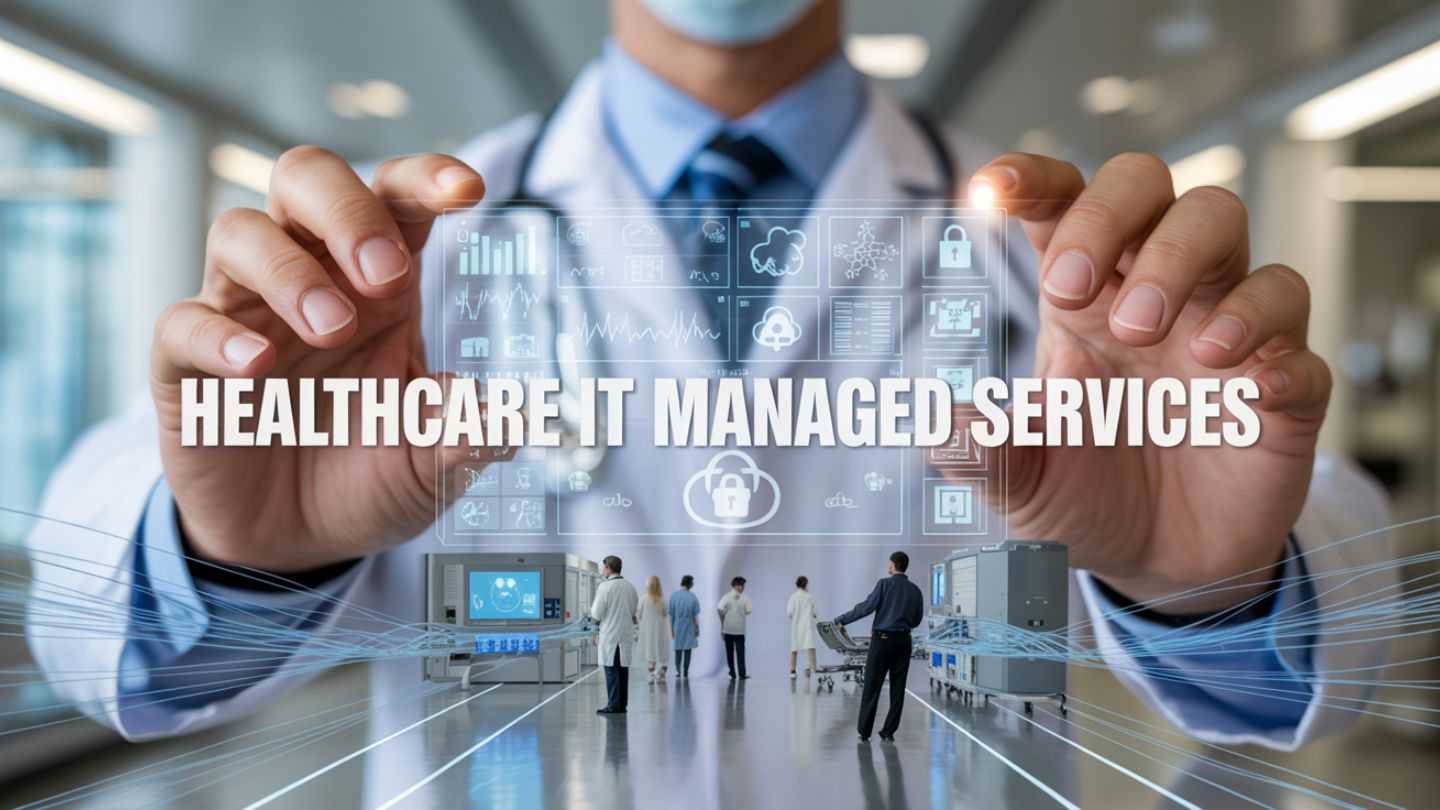
Healthcare organizations rely on technology for patient care, collaboration, and operations, but face rising cyber threats and IT staffing shortages. Managed healthcare IT services provide secure, compliant, and always-on systems that support clinical workflows, protect patient data, and reduce downtime. This blog explains how managed services help ensure reliability, security, and uninterrupted care delivery.
Key Takeaways
Healthcare IT managed services help hospitals, clinics, and health systems maintain reliable EHRs, networks, and security while controlling costs and reducing operational risk. In today’s complex healthcare environments, these services have become essential.
- Healthcare organizations face growing pressure from telehealth, cloud adoption, rising cyber threats, limited budgets, and IT staffing shortages
- Managed services providers handle day-to-day IT operations such as monitoring, support, EHR management, and security, allowing internal teams to focus on patient care and strategy
- Effective managed services are built on strong SLAs, regulatory compliance (HIPAA, HITECH), and 24/7 support for critical clinical systems
- This blog explains what healthcare managed services are, why they matter, key service areas, how to select a provider, and best practices for long-term success
What Are Healthcare IT Managed Services?
Healthcare IT managed services are built around a clear goal: helping organizations understand what managed IT services are and why they are needed in today’s complex healthcare environments. Rather than relying on reactive fixes, managed services provide structured, ongoing oversight of infrastructure, security, and support. This model helps healthcare organizations maintain reliable systems, reduce operational risk, and ensure technology consistently supports clinical care, compliance requirements, and day-to-day operations without constant disruption.
Service Level Agreements define clear expectations for uptime, response times, resolution commitments, and around-the-clock support, creating accountability and driving ongoing improvement. Pricing is typically structured per user, per device, per application, or through hybrid models, allowing healthcare organizations to budget predictably and compare providers effectively.
Why Healthcare Organizations Turn to Managed Services Providers
Healthcare leaders face an impossible equation: deliver more digital services, online scheduling, patient portals, telehealth platforms, and remote patient monitoring, without proportional growth in IT staffing or capital budgets. Something has to give, and increasingly, that something is outsourcing operational IT work to specialized partners.
Several concrete pressures drive healthcare organizations toward managed service providers:
| Pressure | Impact on Healthcare Operations |
|---|---|
| Technical debt from legacy systems | Aging infrastructure demands constant attention, pulling staff away from innovation. |
| IT staff burnout and turnover | Many internal IT departments struggle to retain talent, leaving gaps in coverage. |
| EHR ecosystem complexity | Modern healthcare relies on dozens of integrated systems requiring specialized expertise. |
| Regulatory scrutiny | HIPAA compliance, state privacy laws, and payer requirements demand documented controls. |
| Cybersecurity threats | Protecting patient data requires 24/7 vigilance that small teams cannot sustain. |
As healthcare organizations expand with telehealth services, remote clinics, and new clinical systems, small internal IT teams can quickly become overwhelmed by increased monitoring, integrations, and support demands, raising the risk of missed issues and burnout. Managed service providers absorb routine workloads such as 24/7 monitoring, patching, and frontline support, allowing internal IT teams to focus on higher-value initiatives like system upgrades, analytics, and clinical collaboration.
Core Components of Healthcare IT Managed Services

Healthcare-focused managed services providers typically organize their offerings into several service towers. Understanding these components helps healthcare organizations evaluate proposals and define their own needs.
1) Service Desk and End-User Support
Managed services provide tiered help desk support, resolving routine issues quickly while escalating complex technical problems to specialists, ensuring fast response times without overloading internal teams.
2) Application and EHR Support
Healthcare-focused MSPs manage and optimize EHR platforms and related clinical applications, handling upgrades, integrations, and performance issues to keep clinical and administrative workflows running smoothly.
3) Infrastructure and Cloud Management
MSPs monitor and maintain on-premises and cloud infrastructure, including servers, networks, storage, and secure remote access, supporting scalable, reliable healthcare IT environments.
4) Security and Compliance
Layered security, compliance support, and disaster recovery planning protect patient data and ensure systems can be restored quickly after cyberattacks or outages, minimizing disruption to patient care.
5) Business Continuity and Disaster Recovery
Disaster recovery planning helps healthcare organizations restore systems quickly after cyberattacks, natural disasters, or outages by defining recovery time and data loss thresholds. Managed service providers ensure data replication and tested procedures to minimize care disruption.
Key Benefits of Healthcare IT Managed Services
The benefits of managed IT services extend well beyond basic technical support. Healthcare organizations gain stronger cybersecurity, improved system reliability, predictable operating costs, and consistent support for 24/7 clinical environments. By minimizing unplanned outages and reducing operational risk, managed IT services allow internal teams to focus on patient care, compliance, and innovation while ensuring technology remains secure, scalable, and aligned with organizational goals.
1) Enhanced Security
Modern healthcare faces evolving threats from sophisticated criminal organizations. MSPs provide multi-layered defenses, including email filtering, endpoint protection, network segmentation, multi-factor authentication, and continuous monitoring. These robust security protocols detect and respond to attacks faster than small internal teams can manage alone. With systems that remain secure around the clock, healthcare organizations can focus on patient care rather than constantly worrying about the next attack.
2) Stronger Compliance
HIPAA compliance demands documented policies, audit trails, encryption for data at rest and in transit, and regular risk assessments. MSPs support healthcare organizations through these requirements with compliance management programs, privacy analyst support for PHI access monitoring, and preparation for OCR or payer audits. This reduces the risk management burden on internal teams while ensuring healthcare services meet all regulatory requirements.
3) Cost Predictability
Healthcare managed services often convert large, unpredictable capital expenses into stable monthly operating costs. Instead of budgeting for emergency hardware replacements or unexpected consultant fees, organizations pay predictable per-user or per-device rates. This managed services model helps with financial planning and avoids the spiky expenses that can disrupt tight budgets.
4) Operational Efficiency
Reduced downtime means fewer disruptions to clinical workflows. Standardized processes for onboarding new staff or new locations accelerate growth. Medical practitioners spend less time wrestling with technology workarounds and more time with patients. When managed services provide access to reliable IT, the entire organization operates more smoothly.
5) Scalability
Healthcare organizations grow, acquire new facilities, and launch new service lines. MSPs can quickly extend services to new locations or programs, launching a telehealth initiative, adding a surgery center, or integrating an acquisition, without the delay of recruiting and training new internal IT staff. This scalability supports strategic initiatives and organizational growth.
6) Better Clinician and Staff Experience
Faster ticket response, after-hours coverage, and proactive incident prevention transform IT from a daily frustration into a quiet, reliable utility. When clinicians can count on their technology working, they can focus on delivering exceptional patient care rather than fighting with systems. This directly supports better patient outcomes.
How to Choose the Right Healthcare IT Managed Services Provider

Selecting a managed services provider is a significant decision. This practical checklist helps CIOs, CMIOs, COOs, and practice managers evaluate potential partners with confidence.
- Healthcare Experience
- Technical Breadth and Depth
- Service and Contract Structure
Best Practices for a Successful Healthcare IT Managed Services Partnership
Success depends as much on how the partnership is implemented and managed as on the MSP’s technical capabilities. Organizations that treat managed services as a true partnership rather than a vendor transaction see better outcomes.
- Establish a shared roadmap: Define scope, transition plans, communication cadence, and success metrics in the first 90–180 days to set clear expectations.
- Create joint governance: Form a cross-functional steering group that meets regularly to review performance, plan changes, and manage risks.
- Address change management early: Be transparent with internal IT staff, clarify role shifts toward higher-value work, and involve them in provider selection to build trust and buy-in.
- Use practical communication tools: Rely on shared dashboards, status reports, and executive summaries that connect IT metrics to real operational outcomes.
- Align on core values: Build partnerships around shared commitments to service, continuous improvement, respectful collaboration, and doing what’s right for patient care.
- Reassess periodically: Review the relationship annually or biannually to ensure services evolve with regulatory, clinical, and technology changes.
Final Thoughts
Healthcare IT managed services play a critical role in supporting modern patient care, clinical operations, and regulatory compliance. From securing sensitive patient data and maintaining EHR availability to supporting telehealth, cloud systems, and 24/7 clinical workflows, managed services help healthcare organizations reduce operational risk and improve reliability. A well-structured managed services partnership allows internal teams to focus on innovation and patient outcomes while ensuring technology remains secure, compliant, and consistently available across the organization.
For organizations seeking healthcare IT services in Atlanta, IntegriCom provides managed IT solutions built for the unique demands of healthcare environments, supporting compliance, security, and operational continuity so technology strengthens patient care instead of hindering it. Contact us to discuss healthcare-focused IT services designed to protect your systems, support compliance, and keep your organization operating with confidence.
Frequently Asked Questions
Will a managed services provider replace our internal IT team?
No. Managed services typically complement internal IT by handling 24/7 monitoring and routine support, allowing in-house teams to focus on strategy, clinical relationships, and organization-specific initiatives without burnout.
How does the transition to healthcare IT managed services work?
Transitions happen in phases: discovery, onboarding, vendor coordination, and gradual service takeover, ensuring system stability while workflows adapt, risks are minimized, and clinical operations remain uninterrupted throughout the process.
What should we measure to know if our managed services partnership is working?
Measure clinical system uptime, response and resolution times, incident reduction, and staff satisfaction, then tie these metrics to real outcomes like fewer disruptions, smoother onboarding, and more reliable daily clinical workflows.