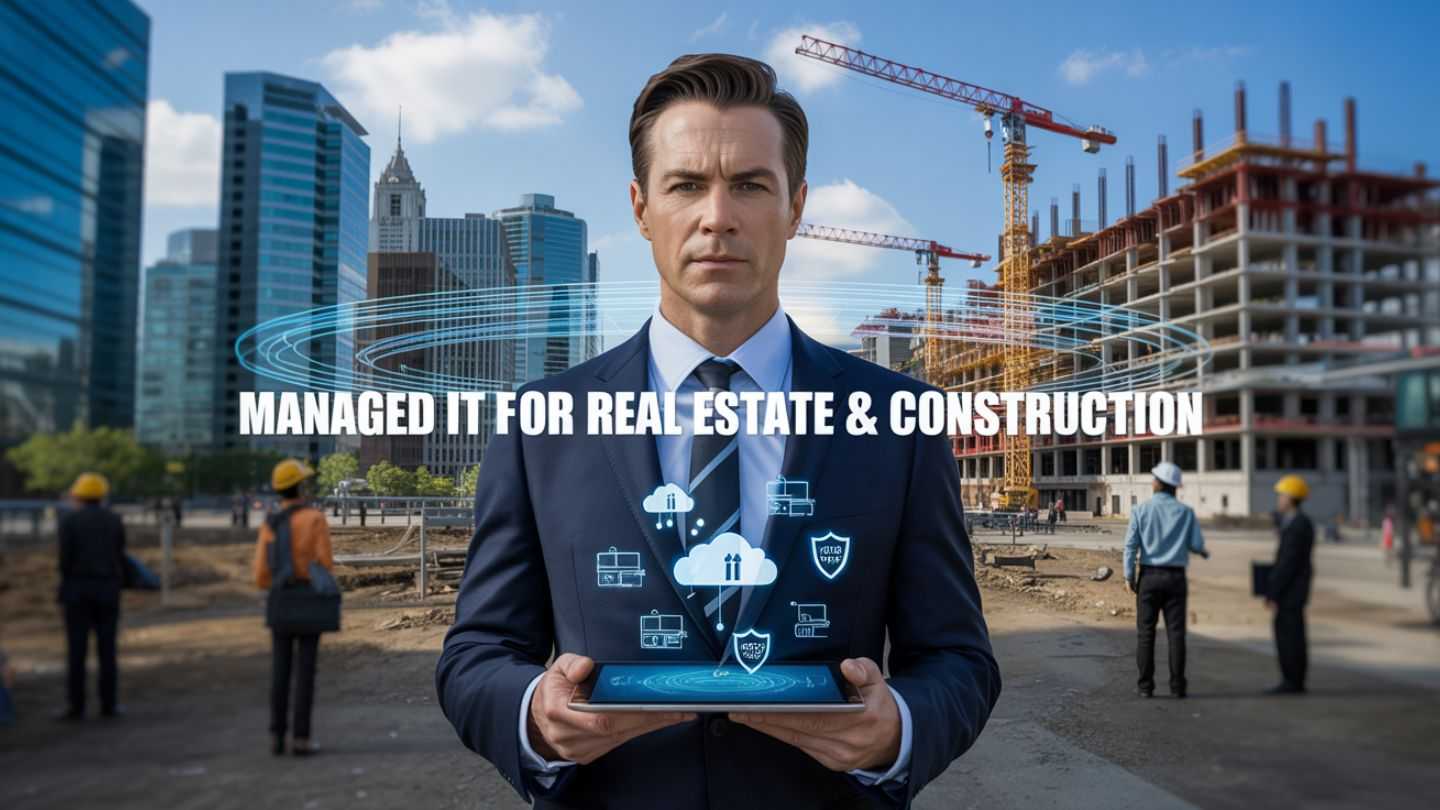
Technology now drives daily operations in real estate and construction, from leasing and maintenance to jobsite coordination. When systems fail, disruptions are immediate and costly. Managed IT delivers proactive support that improves uptime, secures sensitive data, and connects office, property, and field teams. This blog explores how managed IT addresses industry challenges and delivers measurable operational benefits.
Key Takeaways
- Protects tenant data, financial records, and sensitive project information from increasingly sophisticated threats
- Connects office and field teams through standardized tools, reliable networks, and secure remote access
- Replace unpredictable break-fix expenses with fixed monthly investments that grow with your portfolio or project pipeline
- Means your managed service provider understands Yardi, AppFolio, Procore, and the workflows that matter to your business
Industry Challenges: Fast-Moving, Multi-Site, and High-Stakes
Property management companies managing scattered portfolios, general contractors coordinating dozens of subcontractors, and specialty trades working across multiple job sites share a common reality: complex, distributed operations that depend on reliable technology but often lack deep internal IT capacity.
The challenges these organizations face aren’t abstract technical problems. They show up in missed showings, delayed inspections, overtime for maintenance, and stalled draws. This section breaks down the pain points leaders actually discuss in meetings and strategy sessions: the disconnection between the office and the field, cybersecurity risks, limitations of legacy tools, and the chaos of managing multiple vendors.
Cybersecurity and Data Privacy Risks
Real estate and construction firms manage highly sensitive financial and personal data, making them prime targets for phishing, wire fraud, and ransomware. Rising regulatory and investor expectations (PCI DSS, SOC 2) increase pressure, while breaches can halt operations, damage trust, and cause significant financial loss—especially for firms without dedicated security resources.
Legacy Systems and Patchwork Software
Many organizations still depend on aging, on-premise systems that don’t integrate well with modern apps or support remote work. This results in slow performance, manual workarounds, and data errors. Modernizing without disrupting operations requires careful planning and hybrid cloud strategies.
Limited In-House IT Capacity
Most firms have minimal IT staffing, often stretched thin by daily support issues. During growth periods or large project launches, strategic IT planning, security improvements, and standardization fall behind. Managed IT complements internal staff by handling complexity and improving reliability.
Vendor and Licensing Complexity
Managing numerous vendors, licenses, and service contracts creates inefficiency, wasted spend, and accountability gaps. When issues arise, no single party owns the outcome. Managed IT centralizes vendor management, reduces overlap, and provides one accountable point of contact.
What Managed IT Really Means for Real Estate and Construction

Managed IT is a long-term partnership where a provider proactively manages, secures, and supports your IT environment for a predictable monthly cost. Instead of reacting to problems, it focuses on continuous monitoring, maintenance, and strategic planning.
The objective goes beyond basic technical support: managed IT creates a dependable technology foundation that supports leasing, maintenance, construction projects, and leadership decision-making, tailored to the industry tools your teams rely on. By preventing issues before they impact operations through proactive monitoring, patching, and planned upgrades, managed IT delivers more reliable performance, stronger security, and steady improvement aligned with service-focused, accountable values.
Core Components of a Managed IT Partnership
A comprehensive managed IT partnership typically includes several service pillars:
| Service Area | What It Covers |
|---|---|
| Network and Wi-Fi Management | Secure, reliable connectivity across offices, properties, and job sites |
| Device Management | Laptops, tablets, ruggedized field devices, and smartphones |
| Application Support | Industry-specific software plus productivity tools like Microsoft 365 |
| Cybersecurity | Multi-factor authentication, endpoint protection, email security, and access controls |
| Backup and Disaster Recovery | Automated backups, tested restore procedures, and business continuity planning |
| User Support | Help desk with defined response times and escalation paths |
Core Managed IT Services for Real Estate and Construction
This section provides a practical overview of the services tailored to real estate and construction workflows. Each subsection focuses on what the service does, how it shows up in daily operations, and what outcomes leadership will notice.
Cloud-Ready Infrastructure and Collaboration
Managed IT enables secure, standardized cloud collaboration using platforms like Microsoft 365, Google Workspace, and industry tools. It supports seamless access across offices, job sites, and remote work, while coordinating hybrid environments that combine on-premise systems with cloud services.
Cybersecurity, Compliance, and Tenant Data Protection
A layered security approach protects sensitive tenant and project data through firewalls, MFA, email security, monitoring, and staff training. Managed IT helps prevent fraud, detect threats early, and provide compliance documentation required by lenders, investors, and insurers.
Device, Network, and Mobility Management
Managed IT centrally manages devices, Wi-Fi, and mobile access for field and office teams. This ensures secure, reliable connectivity, fast onboarding for new hires, and rapid response if devices are lost or compromised.
Support for Industry-Specific Applications
Rather than replacing software vendors, managed IT coordinates access, integrations, and frontline support for property and construction platforms. Standardized setups reduce errors, improve efficiency, and eliminate wasted licenses across portfolios and projects.
Backup, Disaster Recovery, and Business Continuity
Automated backups and tested recovery plans protect critical data and minimize downtime during failures or disasters. Business continuity planning ensures operations resume quickly, protecting revenue, schedules, and stakeholder trust.
Business Benefits: What Leaders Actually Gain from Managed IT

One of the most practical ways managed IT delivers value is by reducing busywork and boosting productivity across leasing offices, maintenance teams, and job sites. When routine tasks like password resets, device updates, system monitoring, and access requests are handled proactively, staff spend less time troubleshooting and more time focused on residents, projects, and core responsibilities. Reliable systems and responsive support remove daily friction, helping teams work faster, stay organized, and maintain momentum during high-demand periods.
Streamlined Operations from Leasing Office to Job Site
Integrated systems and reliable networks eliminate manual work, improve visibility, and speed up leasing, maintenance, and project workflows. Teams work more efficiently, issues are caught earlier, and staff burnout is reduced.
Reduced Risk and Stronger Compliance Posture
Layered security, access controls, and audit trails lower the risk of breaches and fraud while making compliance easier. Clear documentation and consistent policies build trust with residents, lenders, and partners.
Predictable, Transparent IT Spend
Managed IT replaces unpredictable break-fix costs with a consistent monthly investment. Consolidated vendors and right-sized licenses improve budget clarity and often reduce overall IT spending.
Scalability for Growing Portfolios and Project Loads
Standardized systems allow new properties, projects, and locations to come online quickly without overloading internal teams. Flexible support scales with seasonal demand, expansion, and evolving technology needs.
Better Support for Your People
Reliable technology, responsive help desk support, and simple training resources reduce downtime and frustration. Staff stay productive and confident, focusing on their work rather than IT issues.
How to Choose the Right Managed IT Partner for Your Firm

Selecting a managed IT partner matters more than comparing feature lists. Industry understanding, communication style, and reliability often determine whether a relationship succeeds. This section provides a practical checklist for owners, regional managers, COOs, and HR leaders evaluating potential providers.
- Proven industry experience: Choose a provider with hands-on experience in real estate and construction platforms, job sites, and workflows to ensure faster onboarding and fewer operational mistakes.
- Support availability and responsiveness: Look for extended or 24/7 support, defined response-time metrics, direct access for field teams, and clear escalation paths for critical issues.
- Security, compliance, and risk management: Ensure the provider follows recognized security frameworks, offers proactive monitoring, clear incident response, and supports lender, investor, and regulatory audits.
- Cultural fit and communication style: Prioritize clear communication, accountability, collaboration with non-technical teams, and a partner your office and field staff trust to work with daily.
Final Thoughts
Managed IT has become essential for real estate and construction companies operating across multiple offices, properties, and job sites. From improving uptime and cybersecurity to supporting mobile teams and reducing operational friction, a proactive IT approach helps organizations protect sensitive data, minimize downtime, and maintain consistent performance. When technology is well-managed, teams work more efficiently, risks are reduced, and leadership gains clearer visibility across portfolios and projects.
For organizations seeking real estate IT services in Atlanta, IntegriCom delivers managed IT solutions tailored to the unique demands of property management and construction environments. Contact us now for combining proactive monitoring, strong security practices, and responsive support, we help businesses operate with confidence, scalability, and predictability, ensuring technology supports growth rather than slowing it down.
Frequently Asked Questions
Can we use managed IT if we already have an internal IT person or small team?
Yes. Many firms use a co-managed model where the provider handles infrastructure, security, and after-hours support, freeing internal IT to focus on strategic projects and day-to-day business needs.
What kind of training will our teams need?
Training is usually short and role-specific, focused on new tools, security basics, and support processes, using bite-sized sessions and on-demand resources to fit busy schedules.
How do we measure whether managed IT is actually working?
Success is measured through metrics like response times, system uptime, recurring issues, and security incidents, tied to real business outcomes and reviewed regularly with the provider.